




Standing water on a canopy can quickly turn a relaxing outdoor space into a maintenance problem. For owners of soft top Gazebos, water pooling may stretch the fabric, affect drainage, and place unnecessary stress on the frame when heavy rain occurs.
At SUNJOY, we believe proper setup and regular care are essential to getting the best performance from an outdoor shelter. Understanding why water collects is the first step toward keeping a soft top Gazebo with canopy properly tensioned, supported, and ready for changing weather.
Start by Understanding Why Water Pools
Water pooling usually happens when rain cannot move naturally toward the edges of the canopy. A sagging section creates a low point, allowing water to collect faster than it can drain away.
Several factors can contribute to this problem. The canopy may not be stretched tightly enough, a support component may not be correctly positioned, or the gazebo may have been installed on uneven ground. Fabric can also lose tension over time through normal use and weather exposure.
Heavy rain can make the situation worse because the increasing weight of collected water causes the canopy to sag further. We therefore recommend addressing minor dips early rather than waiting until a substantial amount of water has accumulated.
Assemble the Frame on a Level Surface
A stable, reasonably level installation surface is an important starting point for maintaining the intended canopy shape. Before installing the canopy, we should check that the gazebo is positioned on reasonably level ground or another stable surface suitable for the structure.
An uneven installation can affect how the frame sits and may contribute to inconsistent canopy tension, so the structure should be installed according to the manufacturer's instructions.
After positioning the gazebo, we should confirm that the frame is fully assembled according to the manufacturer's instructions before attaching and tensioning the canopy. Avoid trying to correct a sagging roof by pulling the fabric excessively on one side.
A properly aligned frame gives us a more reliable foundation for maintaining the intended canopy shape.
Create and Maintain Proper Canopy Tension
Canopy tension is one of the most important factors in preventing water accumulation. We should attach the fabric according to the installation instructions and ensure that all designated connection points are properly secured.
The goal is to maintain the canopy's intended shape rather than pulling the fabric in one direction. Uneven tension can create wrinkles or depressions that become collection points during rain.
After the first installation, we recommend checking the canopy again after it has been exposed to changing temperatures or weather conditions. Fabric tension can change over time, so occasional inspection can help us identify areas that require adjustment.
When repositioning the canopy, work systematically around the structure instead of tightening only the visibly sagging section.
Check the Roof Shape and Support Components
The roof frame provides the geometry that allows water to move away from the canopy. If a pole, rib, connector, or other support component is not fully installed, the canopy may not maintain its intended slope.
We should periodically inspect visible frame connections, particularly after severe weather or after moving the gazebo. Loose or incorrectly seated components should be addressed according to the manufacturer's instructions.
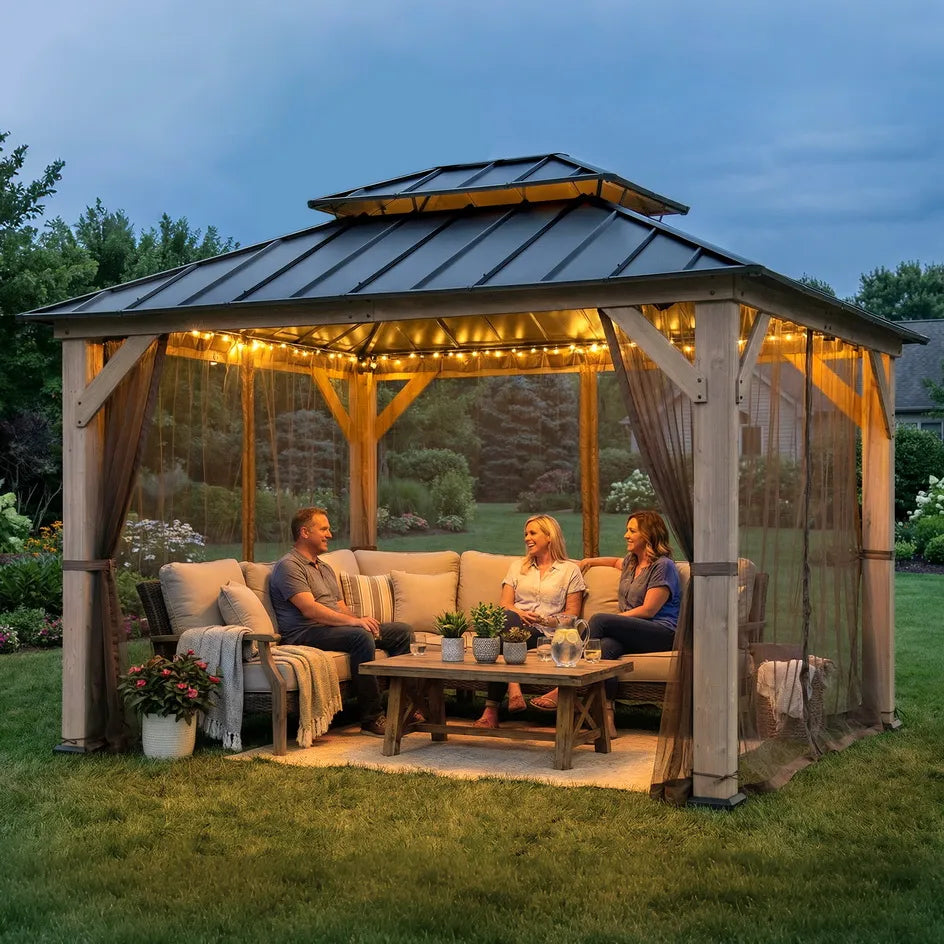
The SUNJOY Double-Tier Premium Soft-Top Gazebo 11x13 - Harbor Gray uses a strong steel frame with a double-tier roof configuration. Its design combines woodgrain-look metal posts, rattan-style beams, and a weather-resistant fabric canopy.
A properly assembled double-tier design can also support ventilation while maintaining the intended roof structure. However, we should still inspect the canopy regularly because no fabric roof should be left with excessive standing water.
Remove Standing Water Safely and Promptly
If water has already collected, we should remove the load as soon as it is safe to do so. Avoid climbing onto the roof or placing excessive force directly on the canopy.
Depending on the structure and situation, water may be released by carefully following the manufacturer's approved procedures for relieving the canopy tension or encouraging drainage. We should never use sharp tools or aggressively push upward against unsupported fabric.
It is also important to stay clear of areas where a large volume of water could suddenly discharge. The weight of standing water can be substantial, particularly after prolonged or intense rainfall.
Once the water has been removed, inspect the canopy and frame for stretching, deformation, or damaged components before returning the gazebo to normal use.
Keep Debris From Interfering With Drainage
Leaves, twigs, and other debris can contribute to water accumulation by weighing down sections of the canopy or interfering with its intended shape.
Regular cleaning helps us identify minor problems before they become larger ones. We should remove loose debris using methods appropriate for the fabric and avoid abrasive tools that could damage the material.
Build a Routine for Seasonal Canopy Care
Preventing water pooling is easier when we treat canopy care as a regular task instead of an emergency response. Before periods of frequent rain, inspect the fabric, frame, fasteners, and canopy tension.
We can also check for early signs of wear, including persistent sagging, damaged stitching, loose connections, or changes in the roof shape. Addressing these issues promptly can help prevent repeated water accumulation.
Protect Your Gazebo by Preventing Problems Early
The most effective way to stop a soft top Gazebo with canopy from pooling water is to maintain the roof's intended shape from the beginning. We can do this by installing the frame on a stable, level surface, securing the canopy evenly, checking support components, removing debris, and inspecting the structure after changing weather.
At SUNJOY, we design outdoor spaces for comfort, flexibility, and everyday enjoyment. With its 11 x 13-foot footprint and double-tier roof design, this model can be maintained as an outdoor gathering space when the canopy is installed, tensioned, and cared for according to the manufacturer's instructions.
Leave a comment
This site is protected by hCaptcha and the hCaptcha Privacy Policy and Terms of Service apply.